
Laser welding: continuous and pulsed technologies
Laser
welding has become a widely accepted method for joining various materials, from
thin plastics to refractory metals. Its applications include the medical,
aerospace, defense, energy, and many other high-tech industries. The welding
process's high flexibility allows it to be used for creating microelectronic
implants and welding rocket fuel tanks.
One of the first and most important questions that may arise when choosing a
laser welding method is whether to use a continuous-wave (CW) or pulsed laser.
Laser welding: continuous and pulsed technologies
Laser welding today occupies a key position among modern methods for joining metals and alloys. It is used in a wide range of industries, from aircraft and automotive manufacturing to medicine and microelectronics. This technology enables high precision, minimal thermal impact, and strong welded joints. However, when selecting equipment, an important consideration is the type of laser— continuous wave (CW) or pulsed. Each has its own characteristics, advantages, and applications. In this article, we will examine the differences, operating principles, and selection criteria in detail, as well as explain where to purchase reliable laser welding equipment.
What
is continuous laser welding?
A
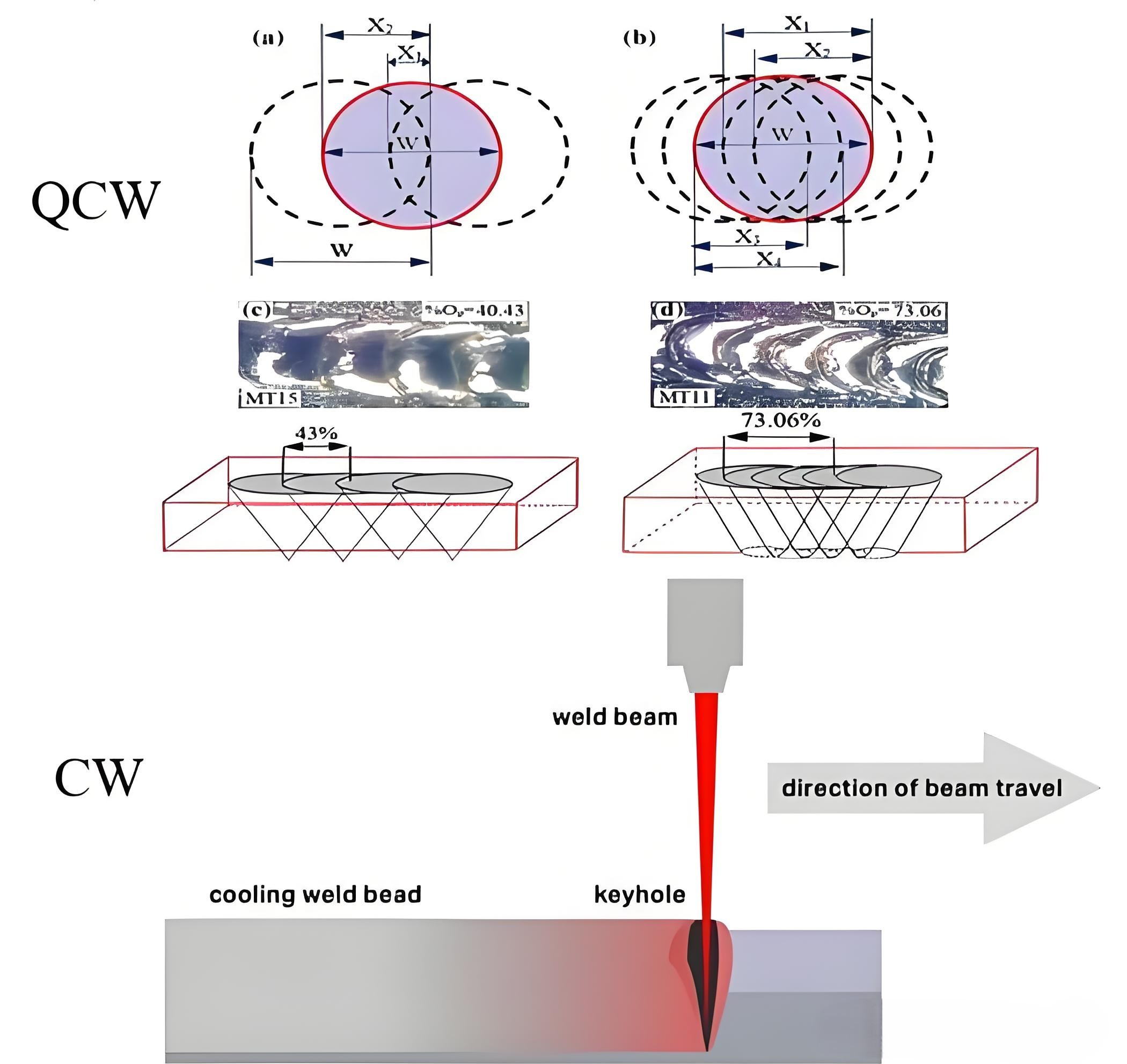
continuous-wave laser generates a constant beam of radiation. As the name
suggests, the beam is uninterrupted and has a stable output. Fiber
lasers are most commonly used in practice, offering high efficiency,
excellent beam quality, and a long service life. They are suitable for
processing a wide range of materials, from steel and titanium to aluminum and
copper.
The
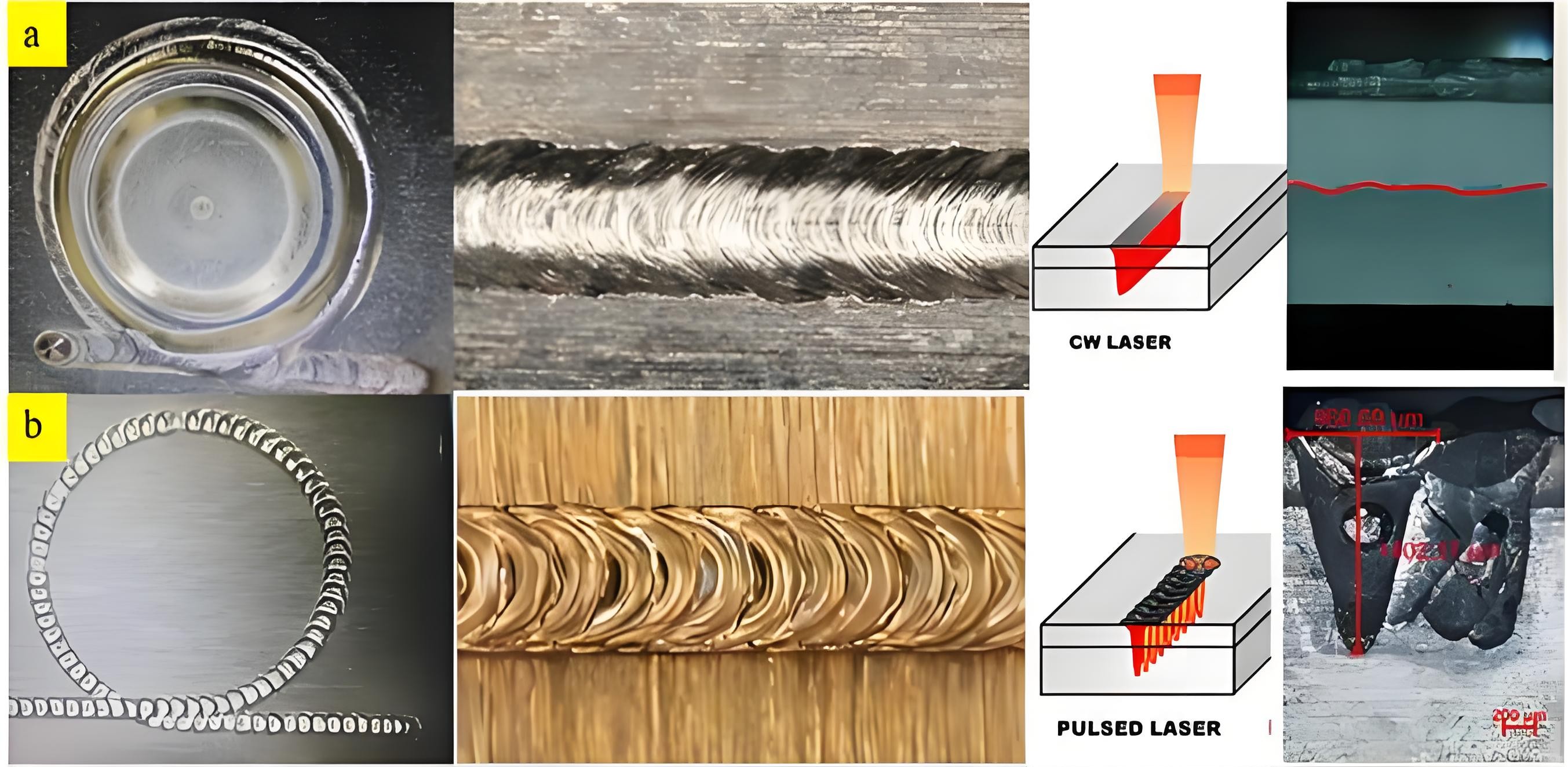
main feature of continuous-wave lasers is their ability to achieve significant
penetration depth. While many welding technologies achieve penetration
depths of fractions of a millimeter, CW lasers can achieve depths of over 1.5
mm, and at high power levels, even tens of millimeters. This result is achieved
through the continuous exposure of the laser beam to the material.
The
power range of continuous-wave lasers is extremely wide: from 200 W to 100,000
W and more. For thin sheet materials, a few hundred watts is sufficient, while
for welding thick workpieces in heavy industry, systems with tens of kilowatts
are used. The choice of a specific source is always based on the material, the
thickness of the parts, and the required throughput.
Continuous
welding is performed at relatively high speeds—2.5 m/min and higher. This high
speed compensates for the intense heat and prevents overheating of the area
beyond the weld. It's important to understand that selecting power, feed rate,
and focusing depth requires an individual approach; there are no universal
parameters. It's precisely because of this precise adjustment that continuous
lasers are used in industries where consistency and repeatability are
essential.
Pulsed
laser welding: operating principle and advantages
Unlike
CW lasers, pulsed lasers produce a series of short pulses of
radiation of a specific frequency and duration. Their average power may be
relatively low, but the peak power per pulse can reach significant values –
often tens of times higher than the average. For example, a laser with a
nominal power of 25 W can produce pulses with a peak power of up to 5 kW with a
duration of just a few milliseconds. This allows for efficient material
processing even with relatively low power consumption.
In
this case, the weld seam is formed by a sequence of overlapping pulses. To
ensure a tight and reliable joint, the pulse overlap rate should be 80–90%.
This approach ensures a tight weld without defects or voids.
One of
the key advantages of pulse welding is the minimal thermal impact on the
workpiece. Thanks to the very short pulse duration, the material outside the
welding zone is virtually unaffected by heat. This is especially important when
working with thin workpieces, miniature parts, or complex-shaped components,
where even the slightest thermal impact can cause deformation.
An
additional advantage is the ability to process highly reflective materials,
such as aluminum or copper. Continuous-wave lasers often struggle with these
materials, but pulsed mode allows for this task to be handled successfully.
Continuous
and pulsed lasers are used to solve various problems. Generally, several
selection criteria can be identified:
· Weld
depth. If
a deep weld is required, a continuous laser is preferable.
· Process
speed. For
mass production, where productivity is paramount, CW welding is a better
choice.
· Precision.When spot welding and
minimal thermal impact are required, a pulsed laser is the choice.
· Materials. For aluminum, copper, and
other reflective materials, it is advisable to use pulsed mode.
· Sealing. When working with
miniature parts and requiring a complete absence of micropores, pulsed lasers
are better suited.
Thus,
the two technologies do not directly compete, but rather complement each other.
Some industries employ combined solutions, where different types of equipment
are used within a single facility for different tasks.